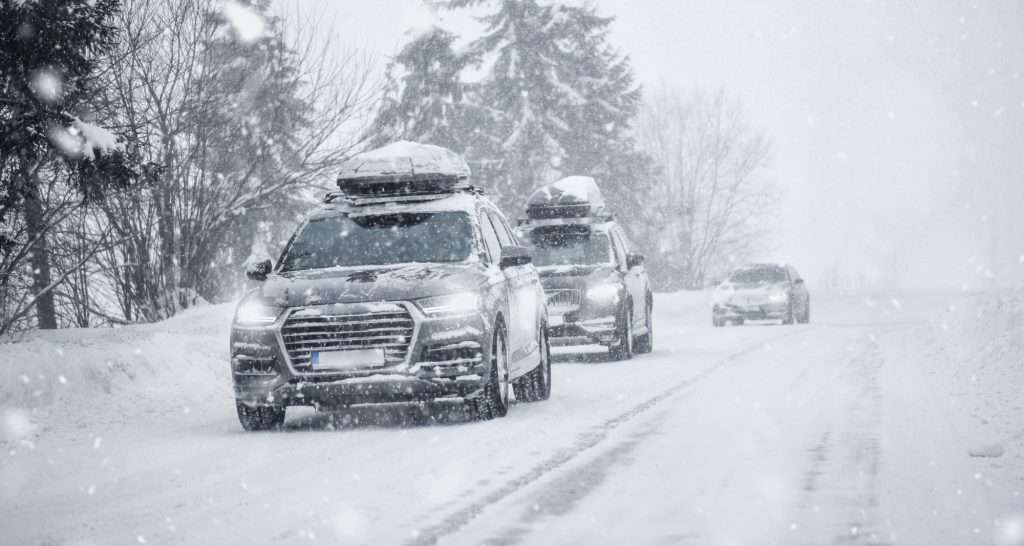
Every day, most of us check the local weather forecast.
Snow, sleet, freezing rain, storms, hurricanes, tornadoes — these outlooks shape how we live our lives. On bad weather days, we cancel plans, stay indoors, and wait it out. On sunny days, we head out, enjoy ourselves, and get on with life. Unfortunately, many people don’t have a choice.
Work obligations still require millions of drivers to get into their vehicles, no matter the conditions. As the old saying goes:
“Neither snow nor rain nor heat nor gloom of night stays us from the completion of our daily trek.”
Snowbirds Have a Choice — But Weather Still Wins
Most snowbirds are retired, semi-retired, on holiday, or enjoying extended stays away from home. Unlike commuters, snowbirds can choose when — and if — they drive.
You can:
- Delay a travel day
- Pull off the road
- Stay put and wait for conditions to improve
Yet despite the best intentions, even snowbirds can be caught in dangerous and fast-changing weather, especially during major winter events like the current Arctic blast and bomb cyclone impacting large parts of North America.
Sudden drops in temperature, black ice, heavy snow bands, white-out conditions, and high winds are creating extremely hazardous driving conditions, even in regions that do not normally experience severe winter weather.
Weather-Related Car Accidents: The Reality
According to the U.S. Federal Highway Administration (FHWA):
- Over 5.8 million vehicle crashes occur every year in the United States
- 21% (approximately 1.2 million) are weather-related
- Nearly 5,000 people are killed and over 418,000 are injured annually in weather-related crashes
- 46% occur during rainfall
- 70% occur on wet pavement
- 18% occur during snow or sleet
- 13% occur on icy pavement
- 16% occur on slushy or snowy roads
Weather-related crashes include those occurring during:
- Rain, snow, sleet, fog
- Severe crosswinds
- Blowing snow, sand, or debris
- Wet, icy, slushy, or snow-covered pavement
No matter how you look at it, the Main Reasons Weather-Related Accidents Happen – We Drive Too Fast for Conditions
How important are my Tires?
In rain, snow, or icy conditions, your tires rely on tread to maintain contact with the road. During heavy rain or with worn tires, water cannot disperse quickly enough, causing hydroplaning.
When hydroplaning occurs:
- Your tires lose contact with the road
- Steering becomes ineffective
- Braking distance increases dramatically
In snow and ice, traction loss happens even faster — especially for drivers unfamiliar with winter conditions.
Reduced Visibility significantly reduces your ability to drive safely: Night driving, Heavy rain, Fog, Snowstorms and blowing snow all have the same precursor – when visibility drops your ability to react safely decrease. You can’t avoid what you can’t see.
Traction and Visibility Determine Fault
In accident investigations, traction and visibility are critical factors. While road conditions are considered, bad weather does not excuse unsafe driving. Drivers are legally required to adjust their speed and driving behavior to match conditions.
A Real-World Example
A Canadian driver traveled south to visit friends in Florida. Preceding on the premise he was heading south to warmer conditions he crossed the border and in South Carolina drove directly into a snowstorm.
- No snow tires expecting to drive in Florida
- Lost control
- His vehicle ended up in a ditch
Thankfully, he was injured. However, his insurance company ruled him 100% at fault — because he was driving too fast for the conditions.
Yes – his insurance rates increased.
The lesson is simple: No matter the weather, drivers are responsible for adjusting their driving to stay safe.
Slow down. Stay alert.
Make sure your vehicle is properly equipped:
- Proper seasonal tires
- Windshield washer fluid rated for freezing temperatures
- Working lights and wipers
Whenever possible, do not drive in severe weather.
For snowbirds, waiting one extra day can prevent a lifetime of consequences.
How We Help Snowbirds Injured Across North America.
For over 40 years, we have helped Canadians and U.S. snowbirds injured in:
- Car & Truck accidents
- Motorcycle accidents
- Pedestrian & Bicycle accidents
- Aviation accidents
Each year, millions of snowbirds travel south to escape the winter — but accidents still happen. When injuries occur outside your home country, the legal and insurance challenges can be overwhelming.
Cross-border accident claims are complex.
Different laws. Different insurers. Different systems.
We help you navigate it all. Need Help After a Snowbird Accident?
📞 Free Snowbird Helpline: 1-800-587-6992
📧 Email: snowbirdaccidents@yahoo.com
🌐 Contact Us: snowbirdaccidents.com/contact/