Tips for Snowbirds Cycling in the USA and Canada
- Research Local Traffic Laws: The legal requirements for bicycles differ from one state to another, province to another, and even City to City. Before going out for a spin, research the cycling laws in the areas you intend to tour. For example: Some make it mandatory for cyclists to ride in bike lanes, disallow bicycles on sidewalks, and insist helmets be worn subject to the age of the rider.
Carry your phone, Identification and Insurance Details: It is advisable to have identification and insurance details with you while cycling. - Stay Updated on Weather Conditions: As we know, weather changes differently from region to region. Don’t ride if it is too hot or too cold.
Stay Updated on Weather Conditions: As we know, weather changes differently from region to region. Don’t ride if it is too hot or too cold.
- Ride in Safety: Always wear a correctly fastened helmet and light-colored or reflective clothes.
- Maintain Your Bicycle: You should also regularly check the brakes are in good working order, the chain is tight, and the tires are not worn.
- Follow Traffic Rules: Obey traffic lights, ridein the same direction with traffic, and use hand signals, particularly while turning.

Common Causes of Bicycle Accidents
Bicycle accidents are often caused by car drivers mistakes.
Some frequent causes include:
Driver Negligence
- Failure to yield to cyclists
- Distracted driving – Dooring
- Failure to look left or right when performing a maneuver such as turning
Road Hazards
- Craters or potholes, water basins, manhole covers, rocks, stones, or even dips in the road.
- Poorly marked bike lanes
Weather Conditions
- Slippery roads due to rain
- Visual acuity is also limited during early morning or evening fog.
Immediate Steps After a Bicycle Accident
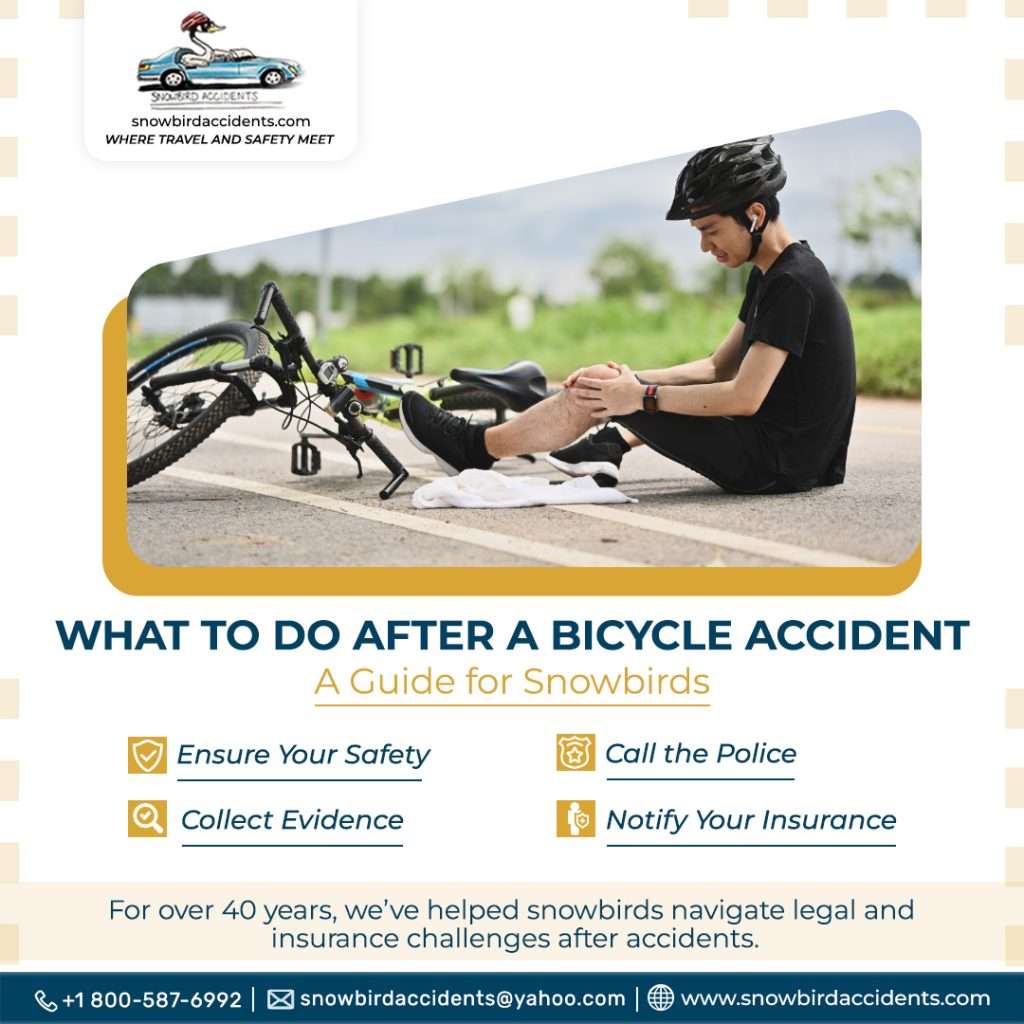
- Ensure Your Safety and Seek Medical Attention: Your health and Safety should be your top priority. If you’re injured, call emergency services immediately. Even if your injuries seem minor, it’s essential to get checked by a medical professional. Some injuries, such as concussions or internal trauma, might not present symptoms right away.
- Move to a Safe Location: If possible, move out of traffic to avoid further danger. However, do not move if you suspect spinal or severe injury—wait for medical professionals to assist you.
- Call the Police: If a motor vehicle was involved or the accident was a result of someone’s negligence, it is essential to report the case to the police. A detailed and structured report gives an official record of the incident, which may be necessary for insurance and possible legal cases. When talking to police officers, do not analyze who could be at fault.
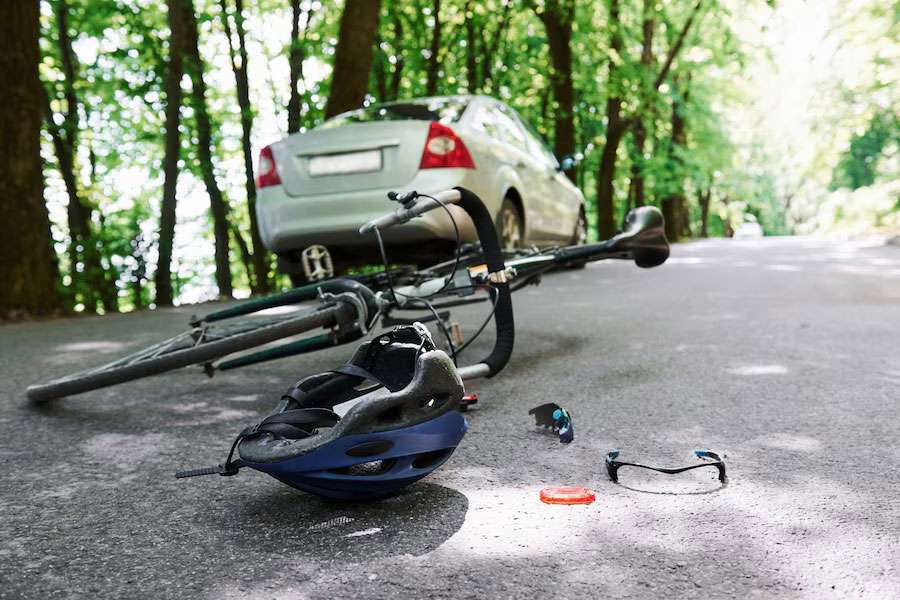
If possible, Collect Evidence at the Accident Scene
With your phone, record photos and moving images of:
- The accident scene
- Your bicycle and any damage
- Your injuries
- Other vehicles involved, license numbers, and any visible signs of damage
- Witness Contact information such as telephone numbers
Inform Your Insurance Company
Believe it or not, any injuries you suffer might be covered by your car insurance policy. Therefore the accident should also be reported to your auto insurer. Most insurance policies have short time frames within which one must report an accident, so don’t wait.
Compensation Options for Injured Cyclists
If you’re injured in a bicycle accident, you may be eligible for compensation through two main avenues:
Insurance Claims
- Personal Injury Protection (PIP)
Pays for medical expenses, damages, and other rehabilitation costs regardless of fault. - Personal Injury Claims
In cases where the accident occurred due to the negligence of another party, you can be compensated for: - Medical and rehabilitation expenses, past, present and future;
- Lost income
- Pain and suffering
- Property damage
Why Timely Action Matters
It would be wise to act fast after any bicycle accident happening to an individual. Failure to seek medical treatment, report the incident to the police, or speak with a lawyer otherwise it may make your case more difficult. Immediate action ensures:
- Proper recording of losses and the complexities of the associated costs
- Failure to adhere to legal timelines – Statutes of Limitations: Every state and province has different time limits for personal injury claims.
For instance: In Ontario and Florida, you have two years from the accident date to file a lawsuit. Failure to meet the various legal time requirements may be fatal to your efforts to seek legal and fair compensation.
Helping Snowbirds Injured Across North America
For over 40 years, we’ve been helping Canadians involved in car accidents and other personal injury incidents while traveling in the United States. Each year, millions of snowbirds—residents from Canada (and the northern U.S.A) — head south to escape the cold. Unfortunately, accidents happen. When they do we are here to help navigate the legal and insurance challenges that arise.
Cross Border Accidents and claims are very complicated!
Call the Free Snowbird Helpline 1-800-587-6992
Or Email – snowbirdaccidents@yahoo.com,
Or https://snowbirdaccidents.com/contact/